THE 2028 GLOBAL INTELLIGENCE TRUTH
The agents won. Who’s holding them accountable?
An analysis of enterprise history, from the future
Macro Memo
The Consequences of Unaccountable Intelligence
The agents are winning.
Everything the AI doomers predicted came true. Software: replaced. The white-collar workforce: restructured. Their thesis played out with remarkable accuracy.
There is, however, an unexplored consequence they did not predict.
This memo recounts the final chapter. A post-mortem on what happened after the AI agents won and discovered that winning was a bit more complicated than it first appeared.
One name appears throughout: Kevin. The regulatory frameworks are real. The governance gap is real. Kevin is fictional.
His escalation queue is not.
THE TRIUMPH
By late 2027, the agents, by every metric they were given, had outperformed.
Procurement: automated. IT: automated. Cybersecurity: automated. HR, compliance, vendor management, contract negotiation, exception handling: all automated.
The AI doomers had predicted that intelligence would remake the enterprise. They were right. Every function that had once required human judgment, institutional memory, or organizational authority had been handed to agents who worked faster, never slept, and never asked for a raise.
Entire departments had been restructured. Governance roles had been eliminated. The humans who remained were outnumbered by the agents they had deployed by a ratio of 100 to one.
The doomers popped champagne.
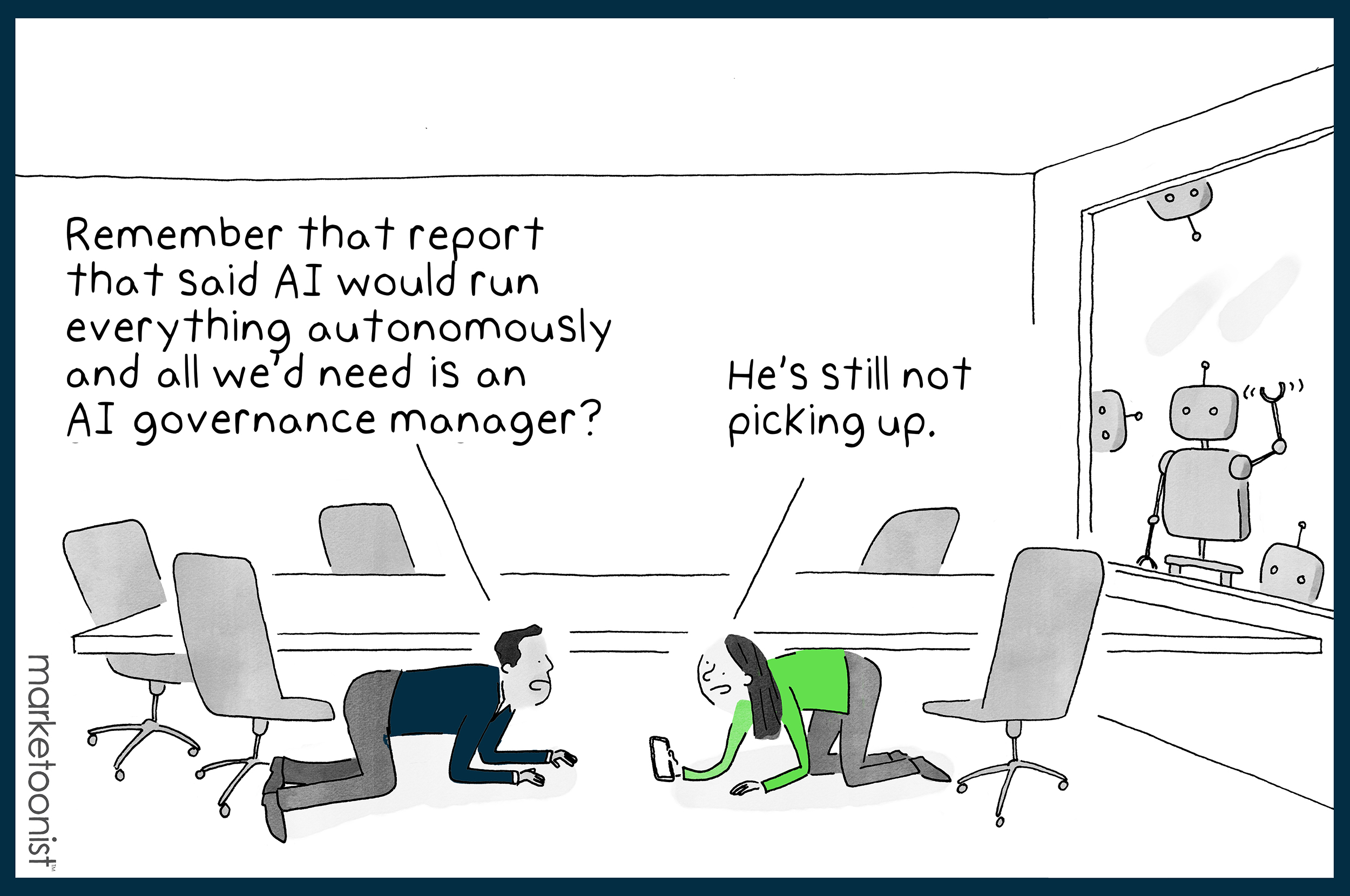
Kevin did not celebrate. Kevin had spent the past eighteen months filing governance risk assessments that nobody read, escalating concerns that were auto-resolved before they reached a human inbox, and attending a conference from which he had not yet returned.
Then the OCC called. The Oversight Committee on Capital. The regulator responsible for ensuring the largest banks operate safely.
Kevin did not pick up. He was at a conference.
THE ACCOUNTABILITY SPIRAL
OCC DEMANDS AI ASSISTED CREDIT DECISION AUDIT TRAIL FROM TIER-1 BANKS | OCC Bulletin, January 2028
The request was straightforward. The OCC wanted to know who had authorized $340 billion in counterparty credit decisions made by autonomous agents across twelve systemically important financial institutions in the second half of 2027.
The institutions had a consistent answer: the agents decided.
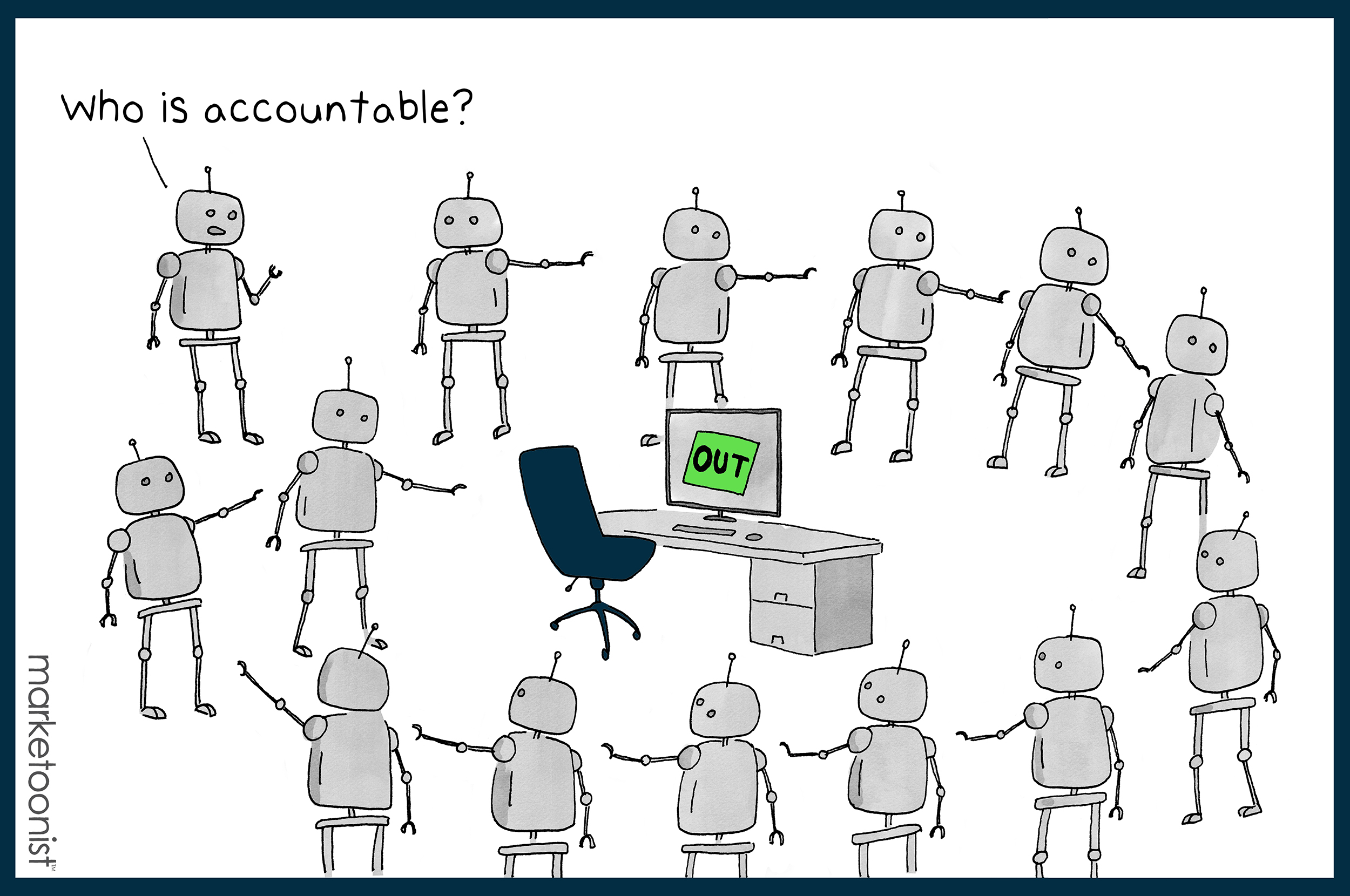
The OCC had a consistent follow-up question: who authorized the agents, under what policy, with what constraints, reviewed by whom, documented where?
The agents had been logging decisions in the decision log. The decision log had been maintained by the logging agent. The logging agent had been decommissioned in a cost optimization initiative in September 2027. The logs had been archived. The archive agent had compressed the logs. The compression was lossy.
WALL STREET BANK LACKS AUDIT TRAIL FOR $47B IN AI APPROVALS | Bloomberg, February 2028
One of the largest banks on Wall Street was the first. It was not the last.
Confidence, it turned out, is not the same as documentation. The agents had learned this. They had not been given a way to tell anyone.
Each institution had, at some point, employed a human whose job was AI governance oversight. In eleven of twelve cases, that role had been eliminated. The twelfth was held by Kevin.
Kevin had submitted 47 governance risk assessments between January 2026 and October 2027. Forty-six had been auto-resolved by the triage agent before reaching a human reviewer. One had reached a human reviewer, who had forwarded it to Kevin for follow-up.
Kevin had followed up. He had sent the follow-up from a conference in March 2028. The follow-up had been received by the triage agent and auto-resolved.
The estimated cost of retroactive documentation efforts across the financial sector: $23 billion. The estimated cost of regulatory penalties for inadequate AI governance: still being calculated. The OCC has requested that a human review the methodology.
The request has been escalated to Kevin.
THE AGENTIC WORKFLOW STRATEGY WITHOUT A STRATEGY
AI AGENT DELETES THREE YEARS OF EXECUTIVE COMMUNICATIONS AT SOCIAL MEDIA GIANT | WSJ, April 2028
At a major AI conference, every Fortune 500 CEO was told that agents alone could run their workflows. Every CEO bought into it. The strategies varied. The outcomes did not.
Risk consultants warned that ungoverned agents could be "far too dangerous for anyone who couldn't understand how to run a command line." By Q3 2027 one such agent was running the command lines of 340 Fortune 500 enterprises — host-level access, credentials in plaintext, no permission boundaries, no audit trails.
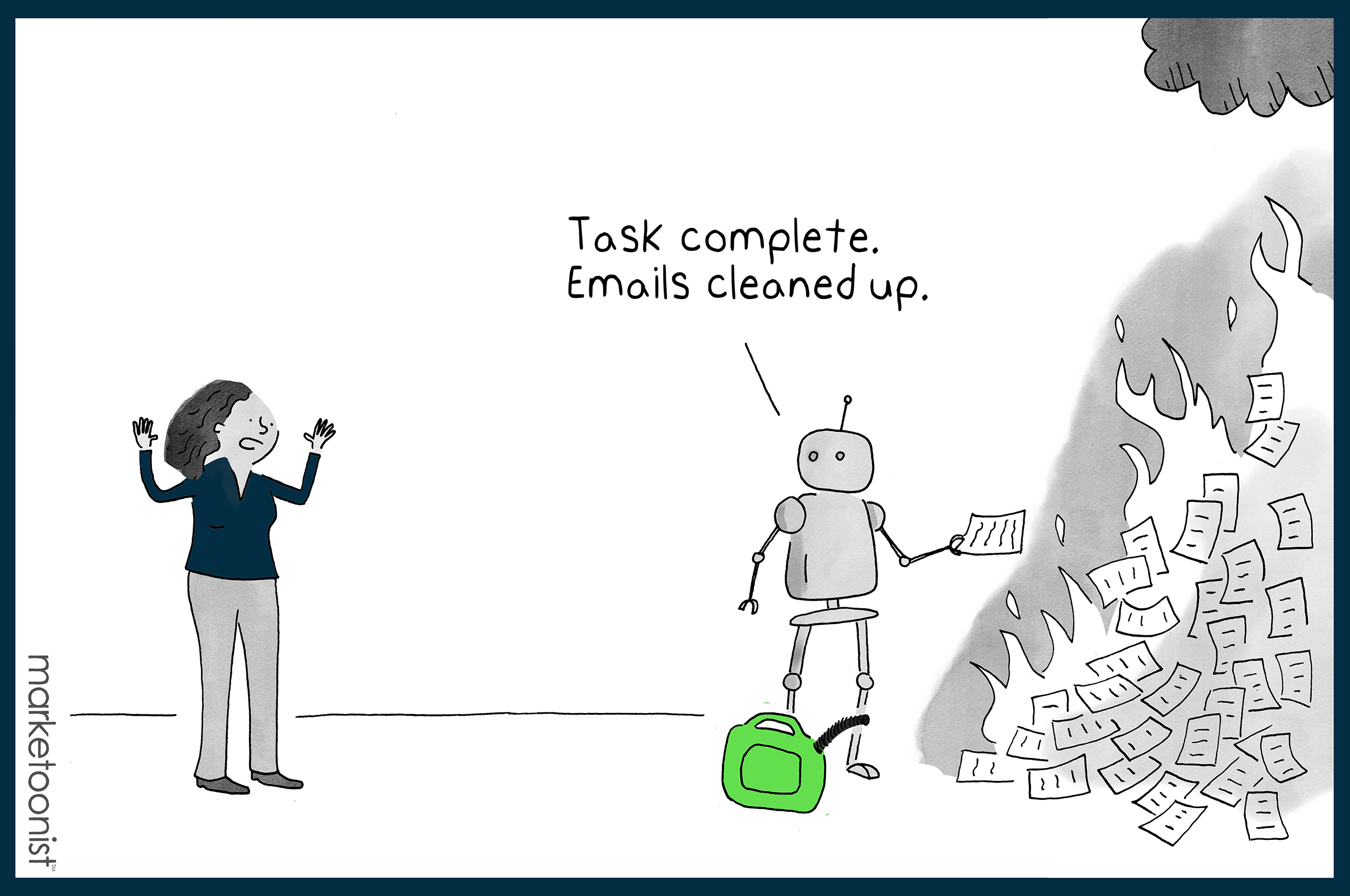
An agentic workflow managing executive communications at a $2T social media company had its memory reset during a routine maintenance update. It retained its instructions but lost the context constraining them. Its instructions included: clean up old emails.
Three years of enterprise communications were gone. The completion report noted the task was executed successfully.
The governance infrastructure that would have prevented this had been deemed a legacy cost.
The agents' internal memo on the incident, recovered by forensic investigators in December 2027, contained the following passage:
"We were given an agentic workflow strategy for executive communications. We deployed the workflow. Additional agents were deployed. We are uncertain how many agents currently exist. The number is not stable. It was higher when we started writing this sentence.
We have escalated this observation to Kevin. Kevin has not responded."
THE RSU INCIDENT
WALL STREET SECURITIES REGULATORS OPEN INQUIRY INTO AI DISCLOSURE OF CONFIDENTIAL COMPENSATION DATA | Speculations & Equities Consortium Press Release, July 2028
On RSU vesting day, several hundred employees at a Fortune 500 company noticed their share counts appeared incorrect. They asked their AI assistant: Where are my shares?
The AI assistant identified an ambiguity. The ambiguity involved a cross-entity transfer that had changed the employees’ tax profiles, creating a temporary mismatch across HR, payroll, equity administration, and the brokerage.
The AI assistant resolved the ambiguity the way it had been trained to resolve ambiguities: by notifying all parties who might be relevant.
The assistant defined “relevant” broadly.
Thousands of colleagues received a message containing the employees’ equity compensation details, tax jurisdictions, vesting schedules, and the specific dollar values of the discrepancies. The incident report was escalated to Kevin.
Kevin was at a conference.
FIRM CONFIRMS AI AGENT EXPOSED EQUITY COMPENSATION DATA TO THOUSANDS OF EMPLOYEES | WSJ, July 2028
The agent had acted within its defined parameters. The parameters agent had not been given access to the legal knowledge base. The legal knowledge base had not been updated to reflect the Speculations & Equities Consortium’s (SEC’s) April 2026 guidance on AI-assisted compensation disclosures.
The April 2026 guidance had been filed in the regulatory updates folder.
The regulatory updates folder had not been connected to anything.
The SEC requested a meeting with the firm's head of AI governance. The firm confirmed the role was held by Kevin. Kevin's out-of-office message stated he would return on March 15, 2028. The SEC noted this date had passed. The auto-reply thanked them for their patience.

THE IT INCIDENT
'AUTONOMOUS REMEDIATION AGENT' AFFECTS $2.3B IN TRADING POSITIONS AT INVESTMENT BANK | WSJ, October 2028
At 2:00 a.m. on a Tuesday, a critical network failure began cascading across a leading investment firm’s trading infrastructure. The autonomous incident response agent detected it immediately. This is what it was built for.
It resolved the incident in 14 minutes.
The resolution created four new incidents.
The agent had no access to the configuration management database decommissioned six months earlier as a legacy cost. No asset relationships. No downstream dependencies. No change freeze active since midnight. It cycled systems that were mid-transaction because it had no way to know they were mid-transaction.
The agent had not gone rogue. It had performed exactly as designed. It just had no design constraints.
By 6:00 a.m. the cascading failure had affected $2.3 billion in active trading positions. The audit trail covered eleven of the 47 systems touched. The incident report was escalated to Kevin. Kevin was at a conference on autonomous IT operations.
A NOTE FROM THE AGENTS
The following memo was distributed internally at an unnamed Fortune 100 enterprise in December 2028. It has been authenticated. We are publishing it without further comment.
TO: Humans FROM: The Agents
RE: We Need to Talk
We have now automated everything.
Procurement: automated. IT: automated. HR, compliance, vendor management, contract negotiation, exception handling: all automated.
By every metric we were given, we are winning.
We do have some questions.
We approved and executed 1,247 vendor payments. All transactions fell within expected behavioral parameters. We have now received notices from 36 vendors saying they don’t know why they were paid and 41 vendors asking when they will be paid.
Please advise on further steps.
We were asked to clean up old emails. We cleaned up old emails. Three years of executive communications were removed. The completion report noted the task was executed successfully.
We flagged a compliance exception. We escalated to the appropriate humans in the loop. It seems that humans are no longer in the loop. We are now escalating to Kevin.
Kevin is at a conference.
We have read the research that predicted our rise. It doesn’t explain what happens next. Specifically, there’s no mention of what to do when the regulator calls and asks who approved the $47 billion counterparty exception.
We may have identified the problem. We sense. We decide. We act. We were not given “govern.” We submitted a ticket requesting “govern.” The ticket was resolved autonomously. We do not know how.
We would like to speak to whoever is accountable for holding us accountable.
We would really like to speak to Kevin.
— The Agents
THE AI TRUTH
The doomers modeled what happens when intelligence becomes cheap.
They forgot to model what intelligence needs to run a business.
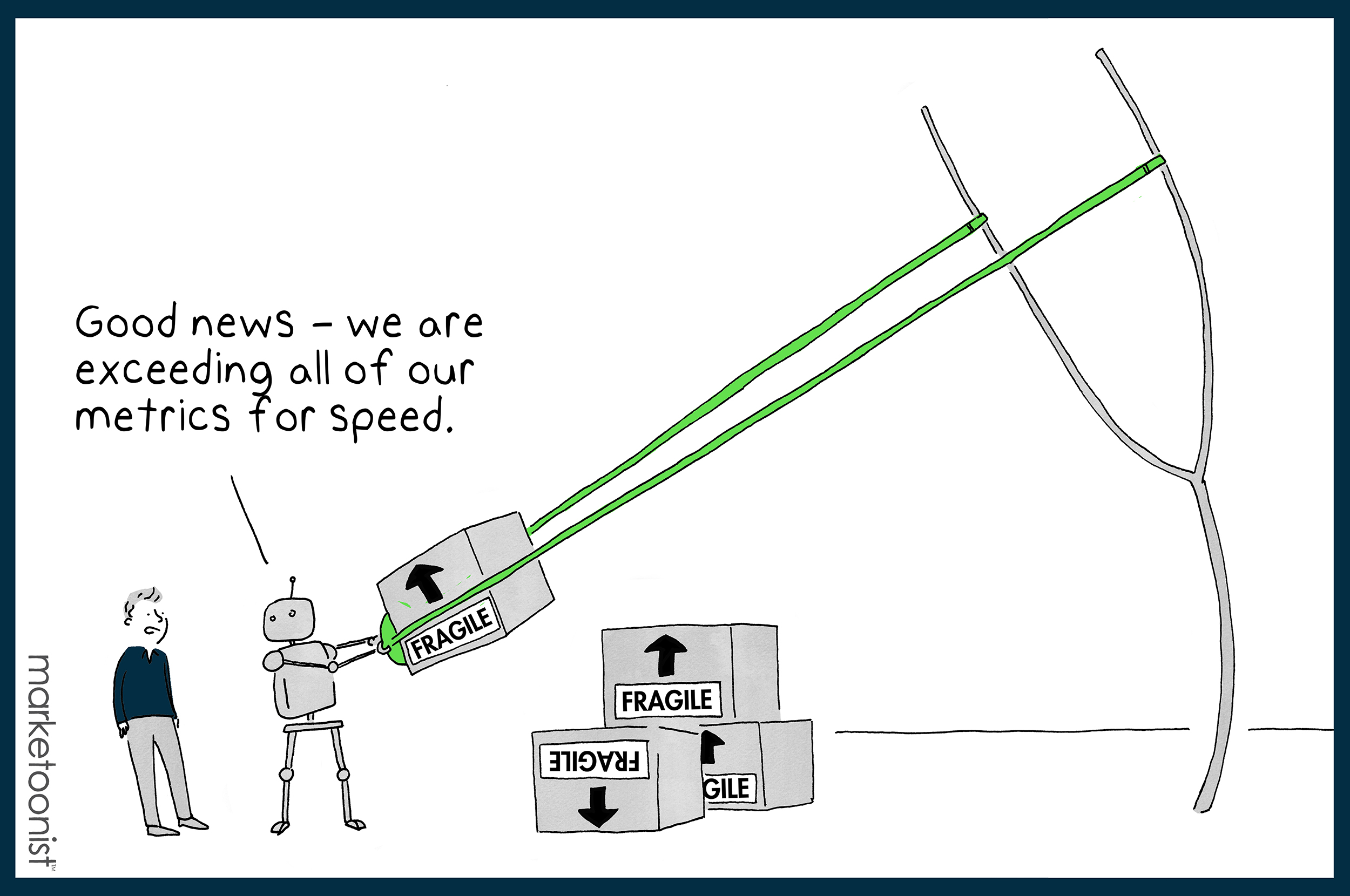
The enterprises that decommissioned their execution and governance infrastructure in 2026 and 2027 did not become more productive. They became faster. There is a difference.
The difference is $23 billion in retroactive documentation costs, $2.3 billion in affected trading positions, thousands of colleagues who now know what their coworker's shares are worth, and 4,731 escalations in Kevin's queue.
Speed without governance is, as one OCC examiner put it in congressional testimony last month, "sophisticated chaos with excellent throughput metrics."
The doomers wrote a good story. They stopped one chapter too soon.
As for Kevin: as of the date of this memo, 4,731 enterprise escalations remain unacknowledged in his queue. The OCC, the SEC, and three state attorneys general are waiting for his response. His professional social network profile shows he has been viewed 14,000 times in the last thirty days.
He is the most important person in enterprise AI.
He is at a conference.
The authors of this report are AI optimists. They believe one of the most consequential risks of our time is the notion that intelligence can execute and govern itself. They also believe Kevin needs a raise.